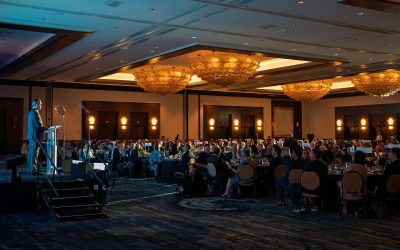

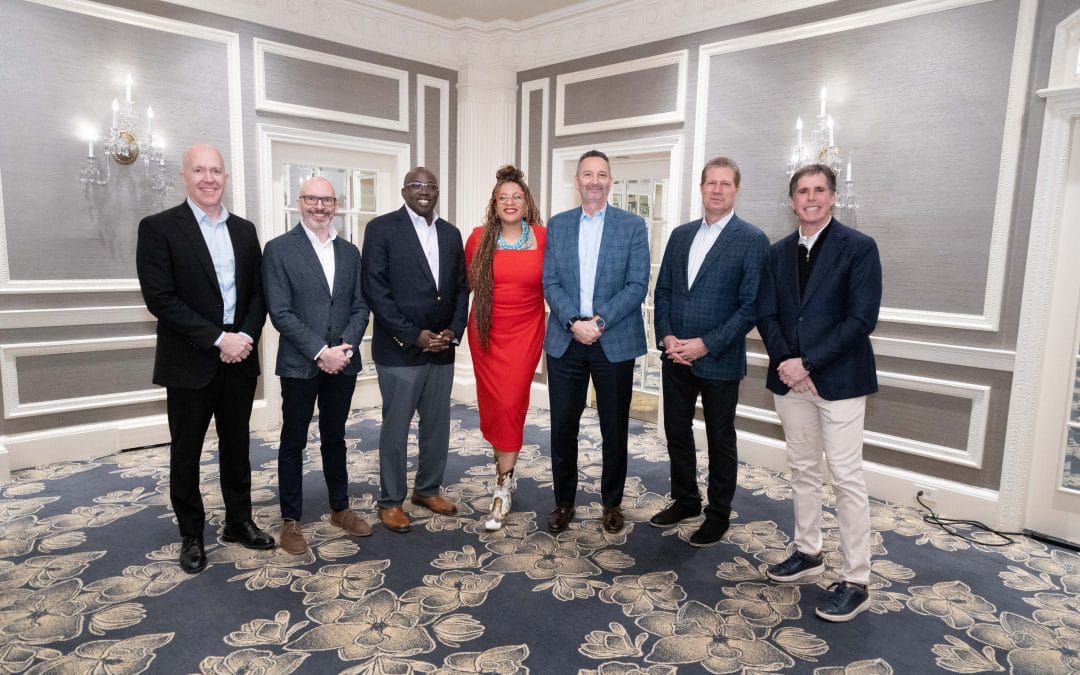
Editor’s Note: Each year at the Airport Experience Conference, AXN Editor-in Chief Carol Ward and Vice President & Publisher Melissa K. Montes hold a closed-door, roundtable discussion with CEOs from leading concessions companies. This year, at the 2026 Airport Experience Conference in February, the six executives discussed everything from wage and labor challenges, to the encroachment of public-use lounges on what has traditionally been F&B and retail concessions territory, to the future of their small business partnerships as the ACDBE program evolves. Participating in the conversation were Carlos Bernal, CEO of Areas USA; Huw Crwys-Williams, CEO of WHSmith North America; Steve Johnson, president and CEO, North America, Avolta; Matt King, CEO of OTG; George Mboya, CEO of SSP America; and Gregg Paradies, president and CEO of Paradies Lagardère.
The following is a portion of the conversation. For full access, please log in, subscribe, or check your printed edition of the April/May issue arriving soon.
Ward: I’d like to start with an overview of the latest broad-based industry developments. What has shifted over the past year, and what’s top of mind as we head into the summer travel season?
Bernal: Business has gotten tougher. Unions have gotten much more aggressive. They’ve always been well organized, and now it’s, I’d say, at a completely new level of organization. The numbers are staggering, in terms of the wage rates that we’re paying.
Mboya: In the past we covered wage rate [increases] with pricing. Now, wages are getting to a point where you can’t push pricing anymore. And the healthy terminal act is just a kick in the gut. The airports are adding to the pressure by creating these higher wage rate corridors within the airports. One other thing, most industries are finding ways to use AI and technology to cover some [labor needs]. We’re in hospitality and we are serving people. You can only take so many people out of business, so we cannot respond in the same way.
Crwys-Williams: This is a capital-heavy industry, and the capital that’s coming into [airport retail and F&B] is private capital. We’re going to have to work out how we get a return on that capital, otherwise it will stop flowing.
King: I’ve been gone [from the industry] for roughly a decade, and it’s gotten harder – it’s gotten a lot more difficult to make money. There will come a point where something gives. It will right itself, but it’s upside down right now.
Montes: The airport hospitality industry has long relied on the anchor categories, such as bars, sit-down dining, QSRs. As the demographics of passengers are shifting, are you seeing meaningful changes in where they’re spending, and how is that influencing the concepts and future building that you’re prioritizing?
Johnson: I think categories are changing. I recently read an interesting stat: in 2024 GOP, 6% of the population was on GLP1 (weight-loss medication). Today it’s around 13%, all the way up to 18% of the population in the U.S. has tried it. We have to start recognizing that people are eating differently. [They’re demanding] higher levels of protein, and that’s true whether it be in convenience retail or in F&B. Alcoholic beverage consumption is at its lowest it’s ever been.
Mboya: The Gen Z population is moving from cocktails to mocktails – it’s a significant shift. They’re also moving from value to experience.
Johnson: Economists keep talking about this K shaped recovery, and the airlines talk about high profits, which are coming from their business travelers. But there is a still a significant portion in the United States and in the world who comes through our airports who are not experiencing that. I think that we need to remember that consumer as they come through.
King: I agree. I think it’s really bifurcated. The folks that are making a lot of money and spending a lot of money, they don’t care [about pricing], right? But there aren’t nearly as many of them as are the folks that are on the bottom of that K (shaped recovery), so we need to figure out how to serve them while battling high labor costs and [other challenges].
Paradies: The low-cost customers (flying on LCC airlines) are an important part of our business, and the LCC business model is at risk now. They’re being squeezed out. We’re concerned, in certain markets, because the LCCs have really driven the traffic in some airports and have created demand. The question is, what will it look like next year, or five years from now?
Montes: To conclude, I’m wondering, as leaders, what keeps you up at night?
Paradies: What CEOs hate more than bad news is uncertainty. I think going into this year, even though there’s a lot of uncertainty, there’s more certainty that there will be more uncertainty. I think we’re all living it and [are learning] how to be flexible, how to focus on what’s important and not get distracted.
Johnson: We thought 2025 was going to be our first truly stabilized year post Covid, and it didn’t turn out that way. International traffic fell, Canadian traffic fell. So, there’s definitely uncertainty. How do we manage through inflation, with union wages are going up? We’re not being helped geopolitically, as far as people coming to visit, which is what we all live off of.
Bernal: The big thing that keeps me up at night, is not having our airport partners really truly understand the challenges that we’re facing. The RFPs and the business opportunities, that model hasn’t changed, and there’s not an understanding of the additional costs, whether it be labor, whether it be construction or, changing buying and travel habits. I think that’s something we, collectively as an industry, need to continue to work on. If those things don’t change it’s going to be a problem. We’re all here to grow our companies and grow our businesses.