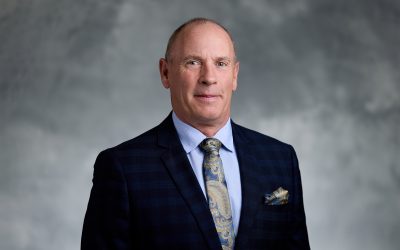

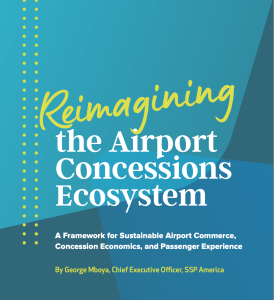
A rebalance of the entire concessions ecosystem is needed to move the airport concessions industry forward, according to a new white paper released by George Mboya, CEO of SSP America.
“The airport commercial ecosystem is undergoing one of its most significant transformations in decades,” Mboya wrote. “The rapid expansion of airline, credit card, and independent airport lounges has changed passenger behavior, while airports face increasing pressure to grow non-aeronautical revenue, elevate passenger satisfaction, support local business participation, finance major infrastructure investments, and respond to the evolving Airport Concessions Disadvantaged Business Enterprise (ACDBE) framework.
“At the same time, food and beverage concessionaires face unprecedented economic challenges, including rising construction costs, labor inflation, operational complexity, and growing uncertainty regarding passenger demand patterns,” the white paper continued. “The central question facing the industry is no longer whether lounges and concessions can coexist. The question is whether airports can create a commercial model that sustains both passenger experience and long-term economic viability.”
The white paper suggests that industry growth “as materially changes passenger behavior and terminal economics. Yet commercial planning models have not evolved at the same pace. Many airports continue to evaluate concessions, lounges, and terminal development independently, rather than as interconnected components of a broader ecosystem. Simultaneously, airport lounges evolved from exclusive airline amenities into mainstream travel product …”
In an interview this week, Mboya said too often, decisions undertaken at airports are made in “silos,” with lounges, concessions and airline needs all addressed individually rather than as part of a larger ecosystem.
He described a scenario where a concessionaire wins a food and beverage contract. “You build the business and put in X amount in capex (capital expenditure),” he said. “Then, the airport or the city makes a decision to put a healthy terminal act into effect, and all the sudden, labor costs have gone up. But the airport wants to maintain certain pricing levels, and the airport doesn’t allow a surcharge or service charge.
“And then the airport decides to add a lounge, which attracts premium customers,” Mboya continued. “That premium customer would have been spending money in concessions, but now they’re spending in the lounge. That money is not coming to the concessionaire – the expected return is no longer there.”
One potential solution is to remove some of the risk from the process. That could be achieved by rent reductions, longer terms or changes to regulations regarding the number of contractions allowed to build at the airport, Mboya suggested.
He also said concessionaires need to be invited to terminal planning conversations earlier. “I don’t think we come to the table early enough,” he said. “I know there are consultants [involved] but those consultants don’t run restaurants, and because they don’t run restaurants, they don’t know the nitty gritty …”
If experienced concessionaires were brought in earlier and were part of the planning process, cost efficiencies could be achieved, Mboya said. “We would turn over restaurants much, much faster, and build them faster while incorporating the passenger experience as we look at the passenger flow,” he said, adding that the result would maximize revenue for both the concessionaire and the airport.